The NeutralsORG

World Neutrals Summit 2026 — Barcelona · August 2026 · 58 spots remaining → Participate at Barcelona
TheNeutrals.ORG™
$200Clarity Snapshot™ from
11sections in every NER report
3–5days delivery
INDS™every evaluation governed
Submit NE-01 Intake →
System 02 · DRS
Dispute Resolution Systems

Seven instruments. One methodology. Arbitration is always the last resort — every instrument before it is designed to prevent it.

Explore DRS →
$800
Mediation from
56+
Convention countries
48h
Appointment
$800Mediation from
56+Singapore Convention countries
164NY Convention countries
48happointment confirmation
Appoint a Neutral →
The Neutral Profession
Get Certified. Join the Bench.

1,329+ certified neutrals. 80+ countries. 12 sector benches. Exclusive by design — maximum 10 per sector per country.

The Profession →
1,329+
Certified
80+
Countries
12
Benches
1,329+certified neutrals
80+countries represented
12sector benches
10max per sector per country
Apply — Free →

Convening a Multi-Party Family Business Mediation: Process Design for Trust Asymmetry

← Back to Insights
Blog 3 min read

Convening a Multi-Party Family Business Mediation: Process Design for Trust Asymmetry
Convening a Multi-Party Family Business Mediation: Process Design for Trust Asymmetry

Convening a Multi-Party Family Business Mediation: Process Design for Trust Asymmetry

Professional Context

A multi-generational family business dispute involving three principals with divergent interests, asymmetric information access, and complete communication breakdown between two parties. One principal had managed the enterprise for two decades; another felt systematically excluded from governance and transparency; a third sought primarily relational repair while bearing significant financial pressure. The principals ranged from highly skeptical of mediation to cautiously supportive, with varying exposure to professional dispute resolution processes.

The Neutral Approach

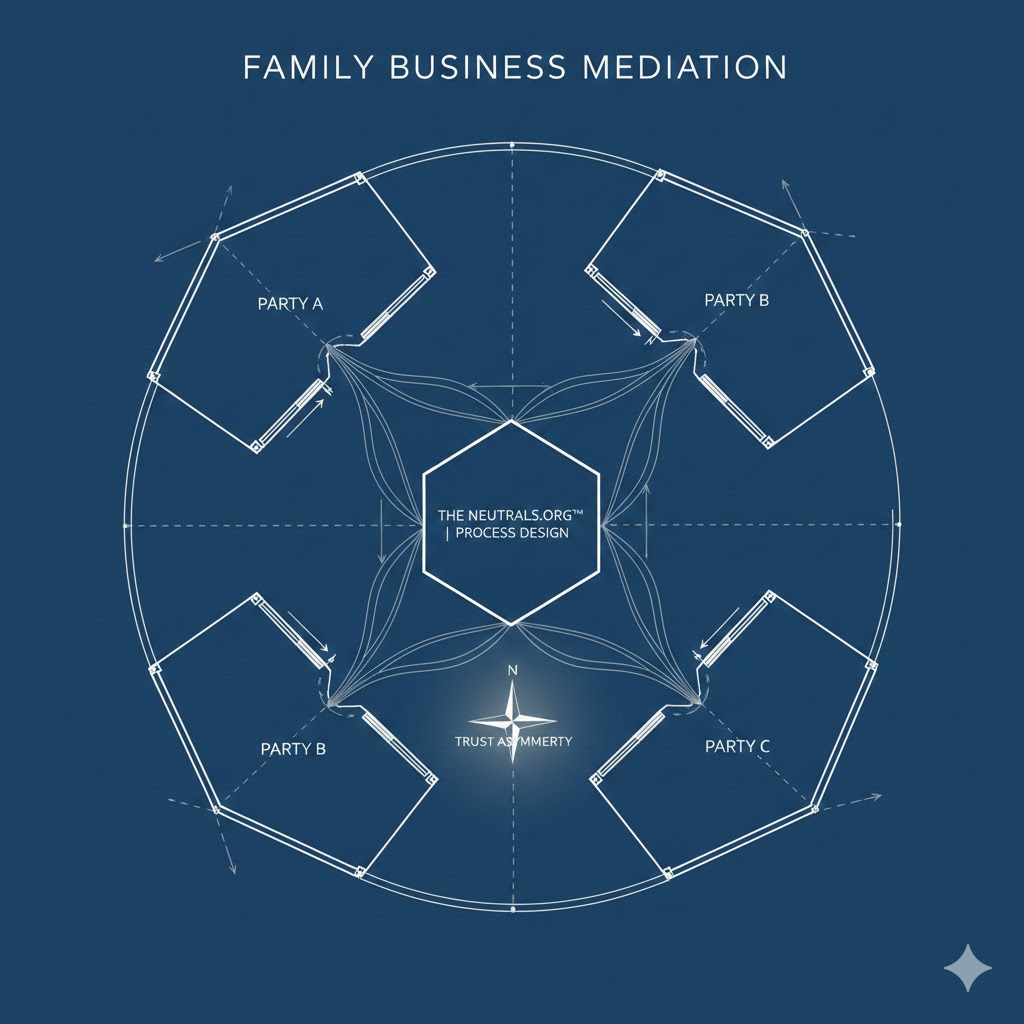
Sequential Individual Consultations: Rather than convening a joint session prematurely, I conducted extended individual consultations with each principal. These conversations served multiple functions: conflict assessment, expectation calibration, and—critically—allowing skeptical parties to evaluate the neutral without committing to participation. Each consultation used identical open-ended framing, inviting principals to articulate their own narratives before I posed clarifying questions. Transparency About Process, Not Pressure to Participate: I explicitly communicated that mediation requires voluntary commitment and that declining was entirely acceptable. This paradoxically reduced resistance; the skeptical party, initially suspicious that the process had been selected by another principal, engaged more openly when assured of genuine optionality. Mediator-Selected Professional Team Design: To address trust asymmetry, I proposed that all neutral experts (appraisers, accountants, legal counsel) be selected by the mediator rather than any principal. This structural choice directly addressed the skeptical party's core concern—that any professional chosen by the managing principal would be compromised—while ensuring the managing principal retained confidence in professional competence. Interest Mapping Before Position-Taking: I developed a framework identifying six overarching interests shared across principals, creating common ground before addressing specific asset disputes. This allowed the joint session to begin with validation rather than confrontation. Confidential Communication Channels: I established that private caucuses would remain available throughout, explicitly acknowledging that some principals might need intermediated communication rather than direct dialogue. This reduced pressure on the most damaged relationship while maintaining process momentum.

Outcome Enabled

Relational and Systemic: All three principals convened for a joint mediation session—itself a significant achievement given the prior communication breakdown. The process design enabled agreement on shared interests and framework principles before substantive negotiations, establishing procedural trust that had been absent. The skeptical party, who initially questioned whether mediation could accomplish anything, became an engaged participant who articulated process suggestions and expressed commitment to continuing. The convening methodology demonstrated that in multi-party disputes with trust asymmetry, process design is substantive work. Neutrality is not merely declared but demonstrated through structural choices that address each party's distinct barriers to participation.